Marcus Goodman Writes Grounded Nonfiction, Sustainably Sourced Satire, and Imaginative Fiction.
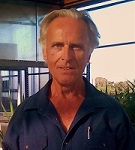
Marcus Goodman is my pen name. Mark Fomenko is my real name. I have written mostly nonfiction and spirituality, and some fiction that examines how human beings live, make decisions, and grow toward greater clarity over time.
Lately I've become somewhat obsessed with writing responsibly sourced, organic edible satire for the Genuine Fake News Network (GFNN). Sadly, I love laughing at my own jokes, and have decided to embrace the experience.
The work ranges from practical writing on health and aging to children’s literature focused on social-emotional development to satirical fiction that examines the contradictions of modern life.
Using a pen name is arguably silly, but I started out as an author with a pen name, and now I'm stuck with it as far as my published work goes. I like the name.
Marcus Goodman LLC was originally created as a business name. It's very easy to hear it right the first time. The name Fomenko almost always needs an explanation. "From where?" Also, Formento, Flamenco, Flamingo, and my personal favorite, Pimento, generally needed exposition, and in extremis, expostulation.
I hired Book Publishing Xperts to build an author's website, primarily for my book, "Longevity Secrets For Men, Women, Even Them Non-Binaries!" and they did a remarkably innovative job, using copy from another author's website they had created and forgetting to replace his name with mine. The site also had lots of trendy dynamics that are completely useless. This is my DIY author's website.
Don't hire Book Publishing Xperts to market your book. They apparently outsource that work to incompetent, unqualified people. It was a costly lesson.
I originally used ChatGPT to build much of this site, and have since rewritten most of it. It may not be much better. The third-person ChatGPT style was very irritating.
Originally, ChatGPT thought I wanted a consultancy business site characterizing me as "Aging Strategist Marcus Goodman." It was an alarming AI hallucination.
The hallucination was related to the aging in place project I'd been brainstorming with ChatGPT.
Being an "Aging Strategist" involved things that may have been profitable but, in my view, were less helpful than building an authority website filled with high-value content from lived experience. AgingInPlaceResource.com will be very helpful.
I have decided to make this website a fun project, and the GFNN satire reflects that.
My interests cross genres; the central concern remains steady: groupthink, how people change, sometimes gradually, sometimes abruptly, and how recognition shapes that change.
I don't write to build a persona or cultivate spectacle. The work stands first. Ideas are tested on the page. Characters are developed carefully. Arguments are structured deliberately.
I was born in 1954. Aging well has been a growing obsession. It's a major issue and will remain so indefinitely. Aging populations are a global issue. Many countries will have too many elderly and too few workers in the coming decades.
I cared for my parents until they died peacefully at home. It was a grueling experience. It's something people should be as informed about as possible, rather than just winging it. Planning instead of improvisation is key.
Drawing on my lived experience and extensive research, I am building an authoritative website, AgingInPlaceResource.com, which is a primary focus alongside the satire.
Living well is not accidental. Deciding well is not automatic. Imagination, too, requires discipline.
Nonfiction: Health, Independence, and the Long View
My nonfiction explores the structural realities of living well across decades. Rather than presenting health as a trend or ideology, I approach it as a matter of accumulated decision-making—daily habits that shape long-term outcomes.
Longevity Secrets examines fasting, metabolic health, and lifestyle through a disciplined lens. The focus is not on quick fixes but on clarity. What supports resilience? What undermines it? How do individuals move from passive reaction to deliberate maintenance of strength and independence?
Current and developing nonfiction projects expand to include aging in place and the threshold moments families encounter as independence shifts. Rather than romanticizing permanence or dramatizing decline, this body of work explores how adults prepare for, recognize, and navigate transition points.
Health, in this context, is not simply physical fitness. It is structural capacity: physical, environmental, relational. Aging is not merely biological time passing. It is a phase requiring foresight and adjustment.
I write for readers who prefer thoughtfulness over slogans and long-term perspective over immediate gratification.
Children’s Fiction: Gentle Night Friends™
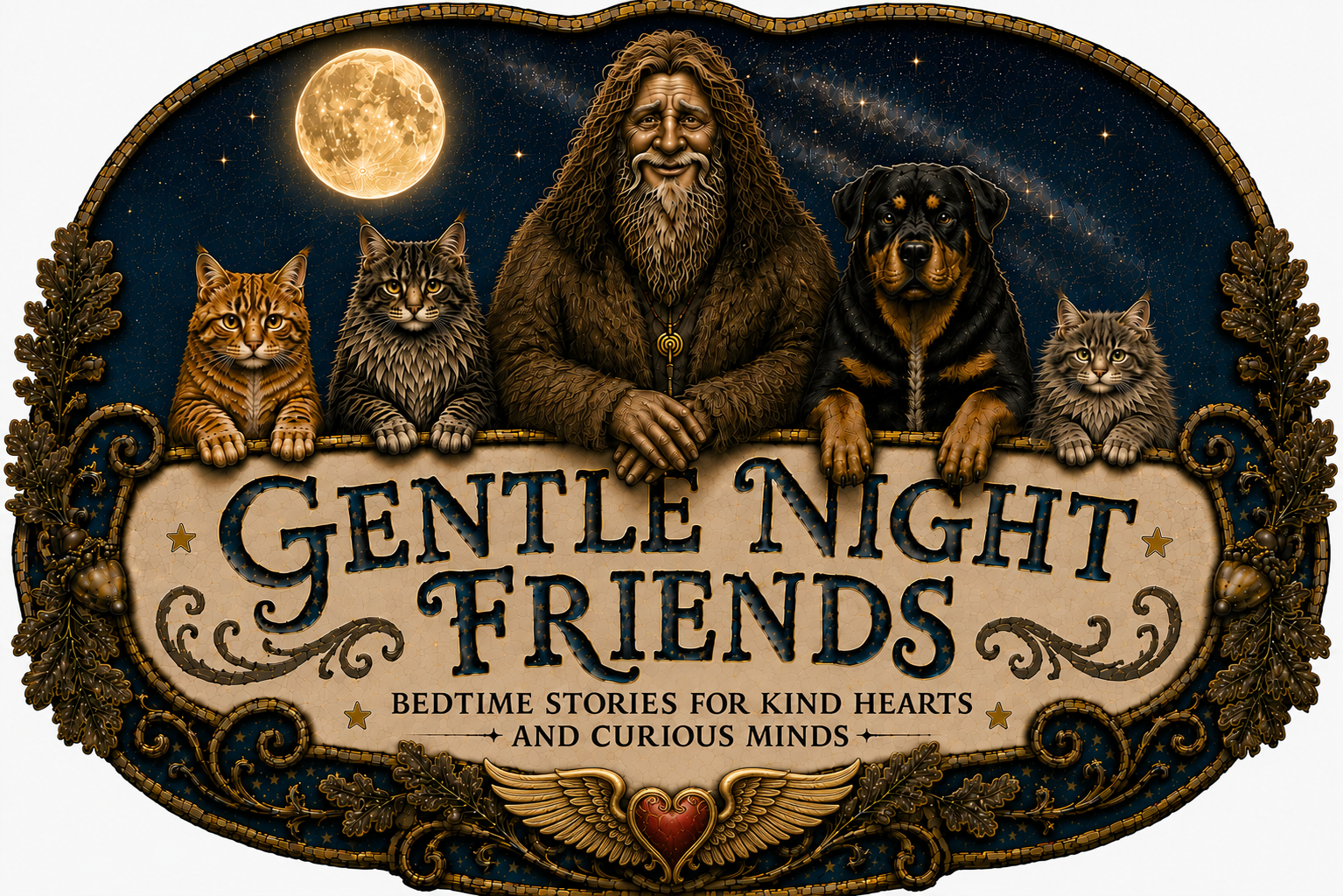
I'm also the creator of Gentle Night Friends™, a developing series of children’s stories centered on social-emotional learning through narrative reflection.
Rather than instructing children directly in abstract lessons, these stories create environments where feelings unfold naturally through character interaction. Walter, Oscar, Jimmy Joe, Professor Pondo, and their companions explore uncertainty, courage, embarrassment, friendship, and self-understanding in ways that respect young readers' intelligence.
The tone is gentle but not simplistic. Emotions are acknowledged without being exaggerated. Dialogue is structured to invite recognition rather than deliver sermons. The goal is to create stories that can be read aloud, revisited, and discussed—whether in families or educational environments.
Social-emotional growth is most powerful when it arises through imagination. Children absorb insight more readily when it is embedded in character and narrative. Gentle Night Friends™ is built on that principle.
The series aims to provide continuity, warmth, and durable emotional intelligence. I've written a number of stories and have not yet published them. Finding competent illustrators was a major issue. No matter how detailed the character descriptions, the results were always terrible. I've decided to use an AI program when the time comes.
Satirical Fiction: Pigusus

At a different scale entirely stands Pigusus, an ongoing satirical series rooted in rational absurdism.
When a genetically engineered winged pig enters a world filled with difficult truths, the result is structured chaos—precise, logical absurdity that exposes contradictions in technology, environmental policy, and institutional thinking.
Pigusus is not randomness disguised as humor. It is disciplined satire. Its absurdity emerges from pushing flawed reasoning to its logical end. Beneath the comedy lies inquiry: how societies deny what they already know, how convenience overrides conscience, and how individuals justify short-term comfort.
Where children’s stories emphasize gentle recognition, Pigusus operates with sharper edges. Where nonfiction analyzes directly, satire reveals indirectly. Each form supports the others.
Imagination and structure are not opposites. In my work as Marcus Goodman, the two instruments are complementary.
Philosophical Reflection: One Holy Source
In addition to books and series work, I maintain a writing presence at oneholysource.org, a reflective and philosophical platform exploring themes of unity, creativity, and the shared human search for meaning.
While distinct in tone from other work, this site expresses another dimension of the same core inquiry: how individuals relate to themselves, to others, and to something larger than personal ambition or circumstance.
The essays there often address spiritual reflection, creative consciousness, and the idea that each person’s life unfolds as part of a larger creative process. The emphasis is not dogma but contemplation—an effort to articulate how living, deciding, and imagining may be understood within a broader framework of connection.
Though oneholysource.org stands as a separate platform, it harmonizes with the rest of my writing. The disciplines differ. The questions remain linked.
A Unified Body of Work
At first glance, health writing, children’s social-emotional literature, satirical environmental fiction, and philosophical reflection may appear unrelated.
They are not.
Each explores a different dimension of becoming.
- How does a child learn empathy and compassion?
- How does an adult maintain strength?
- How does a family navigate change?
- How does a culture confront contradiction?
Across it all lies a consistent thread: recognition precedes growth.
Recognition of habits.
Recognition of emotion.
Recognition of consequence.
Recognition of possibility.
The writing moves across age groups and genres because human development unfolds across them. Practicality and imagination are not competing modes of thought. They inform one another.
The work develops slowly and deliberately. Series evolve over time. Concepts are refined rather than rushed. Intellectual continuity matters.
A Quiet Commitment
This is not a platform built around personality performance. It is built around written work.
I write to explore how human beings live, decide, and imagine—across childhood, adulthood, and the cultural systems that shape both. The aim is not noise. It is clarity.
Readers interested in practical resilience, thoughtful reflection, imaginative storytelling, or disciplined satire are invited to explore further.
The work continues.
Current and Forthcoming Projects.
Nonfiction initiatives deepen exploration into aging transitions and structured decision-making at pivotal life moments. The goal remains clarity and preparedness rather than crisis response.
The Gentle Night Friends™ series continues to grow through modular storytelling built around character continuity and emotional precision. The stories are fun to craft and sometimes quite moving.
The Pigusus canon develops within a carefully maintained narrative framework to preserve tonal integrity while extending its satirical reach.
Additional essays and reflective pieces appear periodically at oneholysource.org.
Future work may move into new territory. The commitment to disciplined thought and moral imagination remains constant.
I have been brainstorming a hard science fiction story lately that is very distracting.
The near-term focus is to build AgingInPlaceResource.com and then two other sites. It'll be a while before I get back to fiction full-time. Adding satirical content here occasionally will have to satisfy that need.

Recent Articles


-
The Pigusus Saga Chapter Two: Introductions
Oct 10, 26 09:06 PM
 In The Pigusus Saga Chapter Two, a flying pig meets the unusual residents of Woodmere Estate, discovers unexpected friendships, and takes their first steps toward freedom.
 -
Longevity Secrets For Men, Women, Even Them Non-Binaries!
Oct 10, 26 05:58 PM
 I was born in 1954. Many people have said I look and move decades younger than I am. I am unusually intelligent and a non-conformist.
 -
Guaranteed Weight Loss Plan
Oct 10, 26 05:51 PM
Tired of complicated diets and weight loss gimmicks? Discover the Guaranteed Weight Loss Plan, a brutally simple, moderately funny approach to losing weight.


